

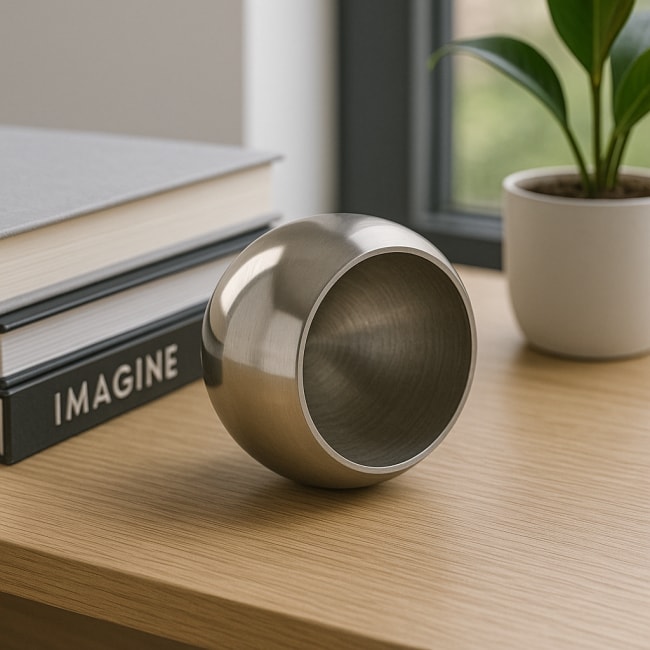
Stainless Steel Hollow Balls
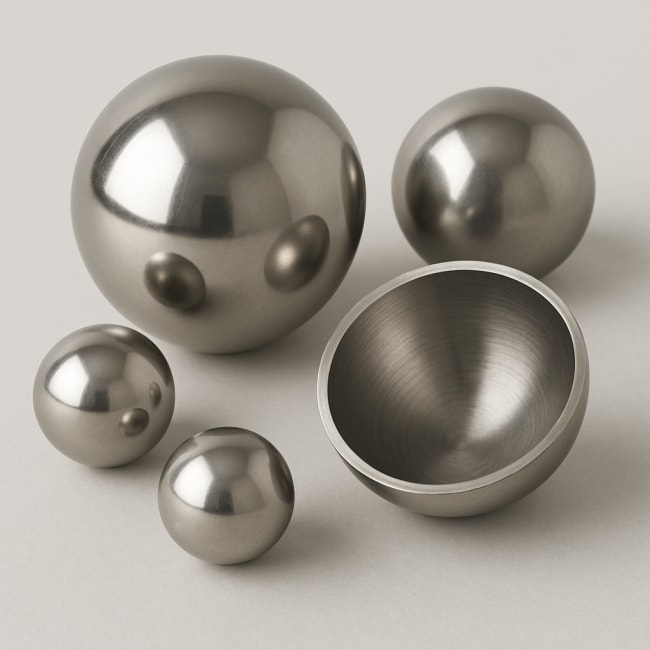
SDBALLS manufactures hollow stainless steel balls for industrial and decorative applications where reduced weight, corrosion resistance and surface appearance are important. Our factory offers customized diameters, wall thicknesses and surface finishes according to specific project requirements.
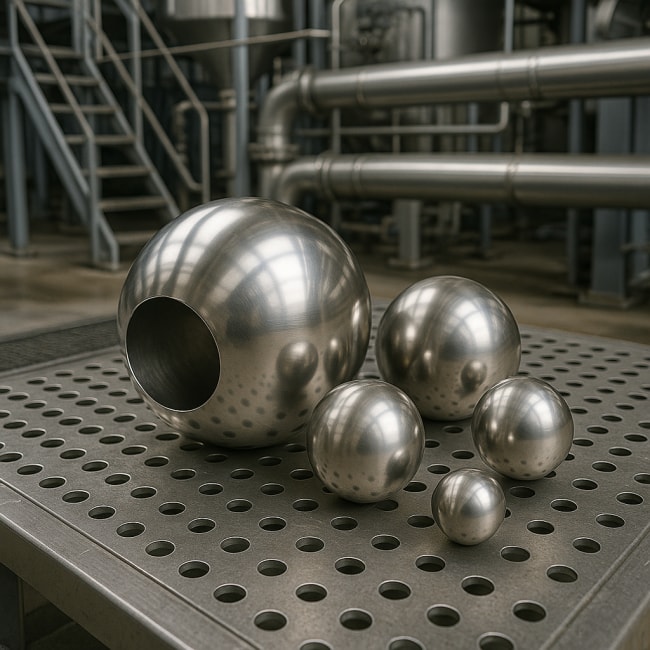
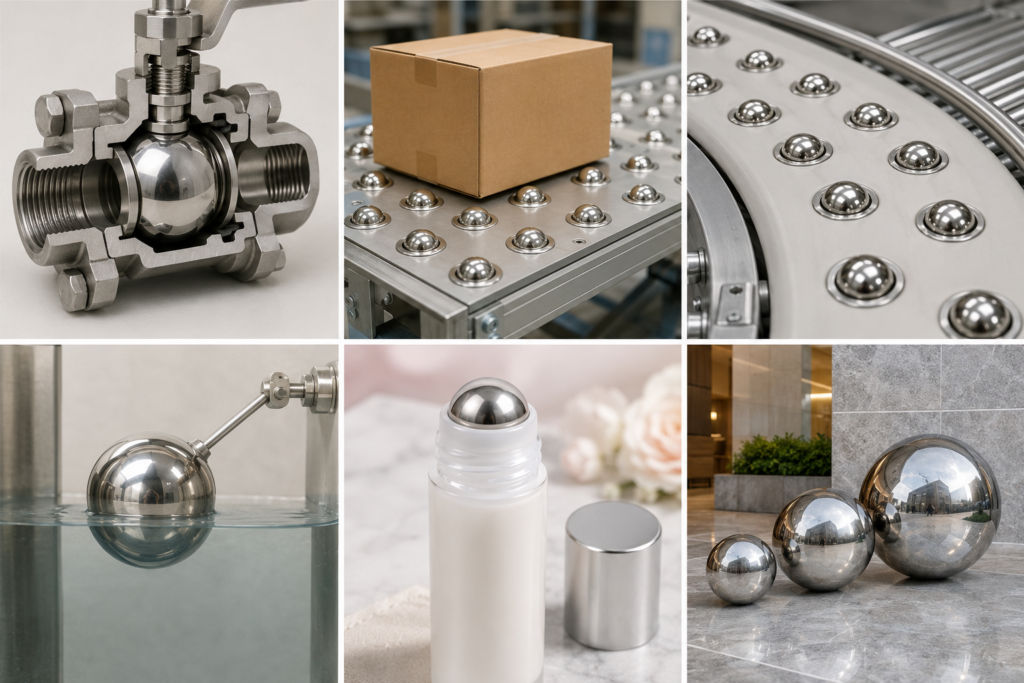
Our hollow stainless steel balls are widely used in special valves, ball transfer units, conveyor systems, floating devices and decorative applications. Customers can provide technical drawings, samples or detailed specifications. Our team will evaluate the requirements and confirm manufacturing feasibility before production.
| Item | Recommended Page Content |
| Product Type | Hollow Stainless Steel Balls |
| Main Material Options | Stainless steel, carbon steel, aluminum, brass and copper |
| Common Stainless Grades | AISI 201, 304/304L, 316/316L, 420C, 440A, 440C |
| Diameter Range | Customized diameters available. Reference sizes include 20 mm and 25 mm. Available range subject to manufacturing feasibility. |
| Wall Thickness | Customized according to diameter and application. Reference thicknesses include 0.6 mm and 0.8 mm |
| Dimensional Tolerance | Customized according to ball diameter, wall thickness and manufacturing process. Specific tolerances can be confirmed based on drawings and order requirements. |
| Surface Finish | Polished, mirror-polished, brushed or customized finish |
| Typical Applications | Special valves, ball transfer units, conveyor systems, floating devices and decorative applications |
Share This Product
Product Overview
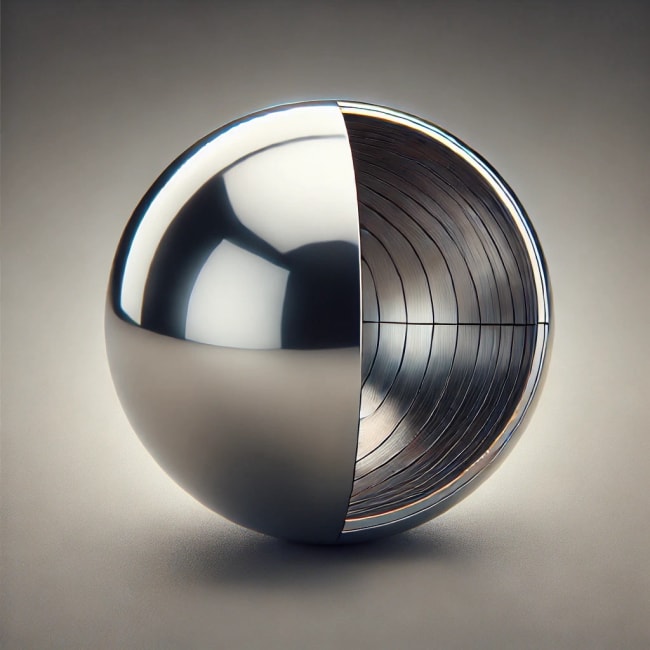
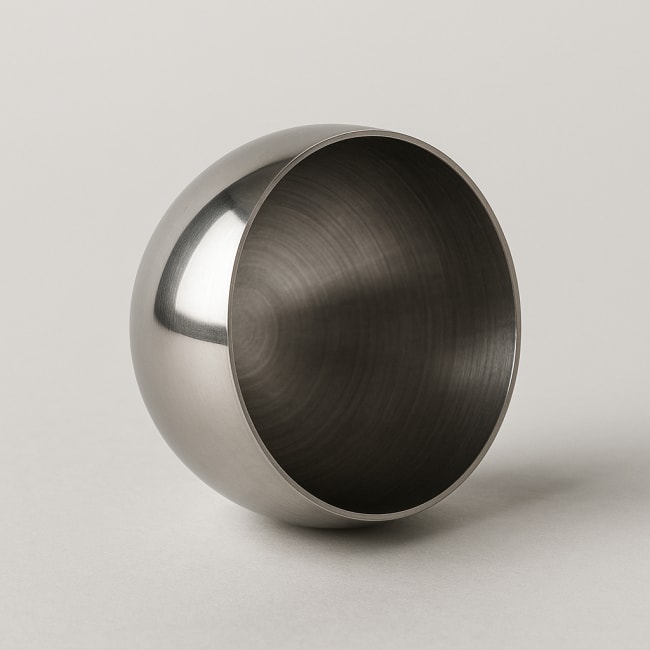
Stainless Steel Hollow Balls are engineered hollow spheres made by forming, welding, polishing, and finishing metal shells into a spherical shape. Their main purpose is not to replace precision bearing balls, but to provide a lightweight, large-diameter sphere for functional, decorative, floating, handling, or packaging applications.
Because hollow balls are welded and polished, their grade and dimensional accuracy are lower than precision solid balls. This should be clearly communicated to industrial buyers. For applications such as bearings, high-speed rotation, tight tolerance assemblies, or high-load rolling elements, solid precision steel balls are normally more suitable. For weight-saving, decorative, floating, transfer, valve, and packaging applications, hollow balls offer a practical and cost-effective solution.
Material Selection & Technical Positioning
The correct material should be selected according to corrosion environment, appearance requirement, magnetic behavior, strength-to-weight target, and cost. AISI 304/304L stainless steel is commonly selected for general corrosion resistance and decorative finish. AISI 316/316L is preferred when improved corrosion resistance is required. AISI 201 may be used for cost-sensitive decorative or general applications where corrosion conditions are mild.
Carbon steel hollow balls can be used when cost and mechanical form are more important than rust resistance. Aluminum hollow balls are suitable for lightweight applications. Brass and copper hollow balls are selected for decorative, conductive, or color-specific requirements. For outdoor architectural or garden products, material, surface finish, wall thickness, and weather exposure should be confirmed before production.
Customized Manufacturing Specifications
SDBALLS provides customized hollow stainless steel balls for different industrial applications.
Our factory can evaluate customer requirements for material grade, ball diameter, wall thickness, dimensional tolerance and surface finish.
Reference specifications include 304 stainless steel hollow balls in 20 mm and 25 mm diameters, with recorded wall thickness options of 0.6 mm and 0.8 mm.
Final manufacturing specifications are confirmed according to technical drawings, samples and project requirements.
Applications of Hollow Stainless Steel Balls
| Application | Suitability | Selection Considerations |
| Special valves and low-load valve components | Application-dependent | Confirm operating pressure, sealing requirements, wall thickness and media compatibility. |
| Ball transfer units and material handling | Application-dependent | Confirm load capacity, impact conditions, ball diameter and dimensional tolerance. |
| Conveyor systems and transfer points | Suitable for selected applications | Confirm load requirements, contact conditions, diameter and surface finish. |
| Floating devices | Application-dependent | Hollow construction can provide buoyancy when properly sealed. Confirm leak-tightness, liquid compatibility and wall thickness. |
| Calibration equipment and reference spheres | Not recommended for precision calibration | Confirm dimensional accuracy and inspection requirements. Hollow welded balls should not be assumed to meet precision calibration standards. |
| Roll-on cosmetics packaging | Application-dependent | Confirm ball dimensions, surface finish, material requirements, cleanliness and packaging compatibility. |
| Interior / exterior decoration | Suitable for decorative applications | Polished or mirror-polished finishes can be selected according to project requirements. |
| Garden gazing balls | Suitable for decorative applications | Confirm diameter, material grade, surface finish and outdoor exposure requirements. |
| High-speed bearings / precision rolling elements | Not recommended | Use solid bearing-grade steel balls or ceramic balls designed for precision rolling applications. |
Material Selection Guide
| Material Option | Typical Strength | Limitations | Recommended Applications |
| AISI 304/304L stainless steel hollow balls | Good general corrosion resistance, clean appearance and versatile industrial applications | Lower corrosion resistance than 316/316L in chloride-rich environments | General industrial applications, decoration, cosmetics packaging and compatible fluid applications |
| AISI 316/316L stainless steel hollow balls | Enhanced corrosion resistance, especially in chloride-containing environments | Higher material cost than 304/304L | Marine environments, chemical exposure and applications requiring enhanced corrosion resistance |
| AISI 201 stainless steel hollow balls | Cost-effective stainless steel option with an attractive appearance | Lower corrosion resistance than 304/316 | Cost-sensitive decorative and indoor applications |
| Carbon steel hollow balls | Economical, formable and suitable for various surface treatments | Requires protective coating, painting or plating to prevent rust | Indoor applications, painted decorative spheres and cost-sensitive projects |
| Aluminum hollow balls | Lightweight, generally non-magnetic and easy to form | Lower hardness than steel; alloy and corrosion conditions should be considered | Lightweight assemblies and decorative projects |
| Brass / copper hollow balls | Attractive appearance, electrical and thermal conductivity, generally non-magnetic | Softer than steel; material cost and properties vary by alloy | Decorative, electrical, artistic and special design projects |
Manufacturing & Process Control
SDBALLS manufactures hollow stainless steel balls through a production process tailored to material, diameter, wall thickness and surface finish requirements. Depending on product design and size, the manufacturing process may include sheet forming or half-shell forming, trimming, welding, grinding, polishing, cleaning and final inspection.
Key process control points include material thickness, welding quality, roundness, weld seam finishing, dimensional accuracy and surface appearance. For decorative applications, polishing quality and appearance consistency are particularly important. For industrial applications, wall thickness, dimensional fit, sealing requirements and material compatibility should be confirmed before production.
Quality Control & Inspection
SDBALLS carries out quality inspections before delivery to help ensure that hollow stainless steel balls meet the confirmed order specifications.
Depending on product requirements, inspection items include outer diameter, wall thickness, roundness, surface appearance, weld seam condition, polishing quality, material grade identification, packing condition and quantity.
For floating or valve-related applications, leakage checks and other project-specific functional inspections can be arranged according to customer requirements. For customized orders, technical drawings, samples and inspection criteria should be confirmed before mass production to ensure that the finished products meet the agreed specifications.
Packing Options
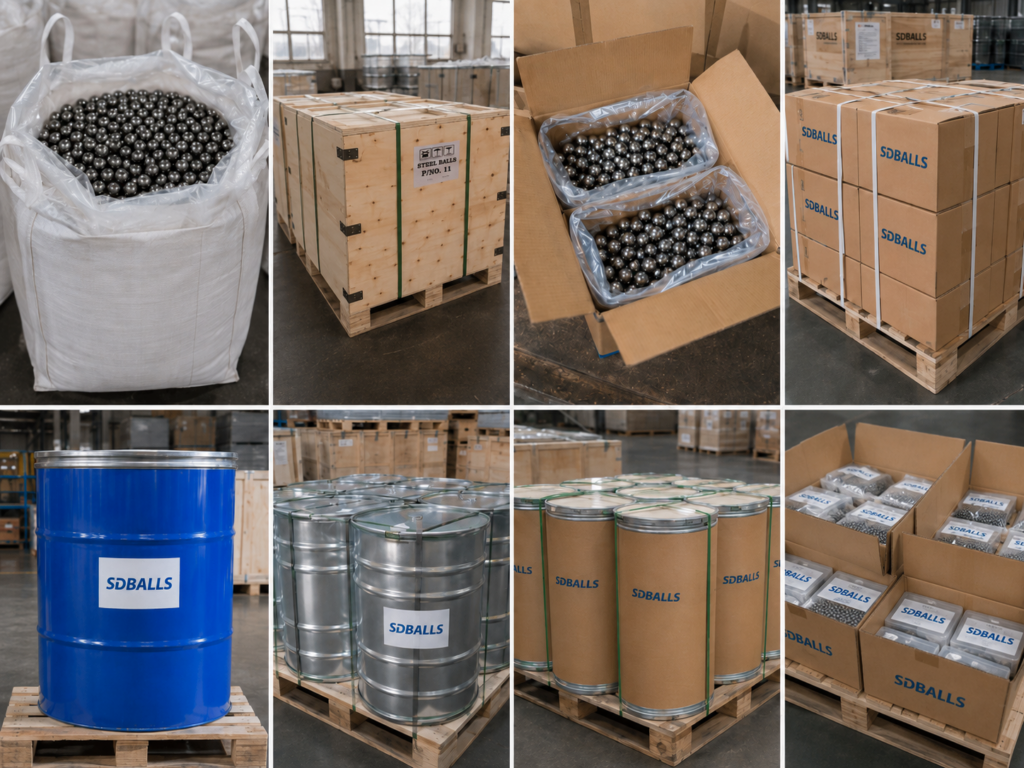
Packing can be arranged according to ball size and surface finish requirement. Small hollow balls can be packed in bags, cartons, pails, or pallets. Large decorative hollow spheres and garden gazing balls should be protected individually with wrapping, foam, cartons, wooden cases, or palletized export packing to prevent scratches and deformation during transportation.
How to Specify for Quotation
To receive an accurate quotation for customized hollow stainless steel balls, please provide the following information whenever available:
- Material: Stainless steel 201, 304/304L, 316/316L, carbon steel, aluminum, brass or copper.
- Outer Diameter: Required ball diameter in mm.
- Wall Thickness: Required wall thickness in mm.
- Surface Finish: Bright, polished, mirror-polished, brushed or customized finish.
- Dimensional Tolerance: Required tolerance or technical drawing, if specified.
- Application: Intended use and operating environment.
- Order Quantity: Required quantity and estimated purchasing frequency, if known.
- Packing Requirements: Standard or customized export packaging.
For floating or sealing applications, please also specify the required buoyancy, sealing conditions and liquid medium.
Technical drawings, samples or reference photos are welcome. Our engineering team will review the requirements and confirm manufacturing feasibility and specifications before order confirmation.
If you are unsure about some technical details, simply send us your product drawings, sample photos or application requirements. Our team can help evaluate the appropriate specifications.
Technical FAQ
Q1: What are stainless steel hollow balls?
A: Stainless steel hollow balls are spherical metal shells manufactured through forming, joining, welding and surface finishing processes. They are designed for applications where reduced weight, corrosion resistance, appearance or buoyancy are important. They are available in different diameters, wall thicknesses and surface finishes.
Q2: Are hollow balls the same as precision bearing balls?
A: No. Hollow balls and precision bearing balls are designed for different applications. Hollow balls are generally used for lightweight structures, decoration, floating devices and selected industrial applications. Precision bearing balls are typically solid and manufactured to tighter dimensional and roundness tolerances. Hollow balls should not be used as direct replacements for high-speed or high-load precision bearing balls.
Q3: What materials can SDBALLS manufacture hollow balls from?
A: SDBALLS manufactures hollow balls in stainless steel, carbon steel, aluminum, brass and copper. Stainless steel options include AISI 201, 304/304L and 316/316L. Material selection depends on corrosion resistance, strength, appearance, weight and application requirements.
Q4: Can hollow ball diameters and wall thicknesses be customized?
A: Yes. SDBALLS offers customized diameters and wall thicknesses according to material, product dimensions and application requirements. Reference 304 stainless steel hollow ball sizes include 20 mm and 25 mm diameters, with wall thickness options of 0.6 mm and 0.8 mm. Other specifications can be evaluated based on technical drawings, samples and manufacturing feasibility.
Q5: Can stainless steel hollow balls be used outdoors?
A: Yes. Stainless steel hollow balls can be used in outdoor decorative and industrial applications when the material grade and surface finish are selected appropriately. For coastal or chloride-rich environments, 316/316L generally offers better corrosion resistance than 304/304L. The final material selection should consider actual environmental exposure.
Q6: Can hollow stainless steel balls float in water?
A: Yes, hollow balls can be used in floating applications when their structure is properly sealed and their size, wall thickness and weight provide sufficient buoyancy. Sealing integrity, liquid compatibility and operating conditions should be confirmed before production.
Q7: What surface finishes are available for stainless steel hollow balls?
A: Available surface finishes include bright, smooth, polished, mirror-polished, brushed and customized decorative finishes. The final finish depends on material, ball size and application requirements.
Q8: What information is required to request a quotation?
A: To receive an accurate quotation, please provide the material grade, outer diameter, wall thickness, dimensional tolerance, surface finish, application and order quantity. Technical drawings, samples or reference photos are also welcome. For floating or sealing applications, please specify the liquid medium and operating conditions. Our team will review the requirements and confirm manufacturing feasibility before order confirmation..
Related Products
Schedule A Request
Get in touch with us today for any service. (*) Indicates required fields.